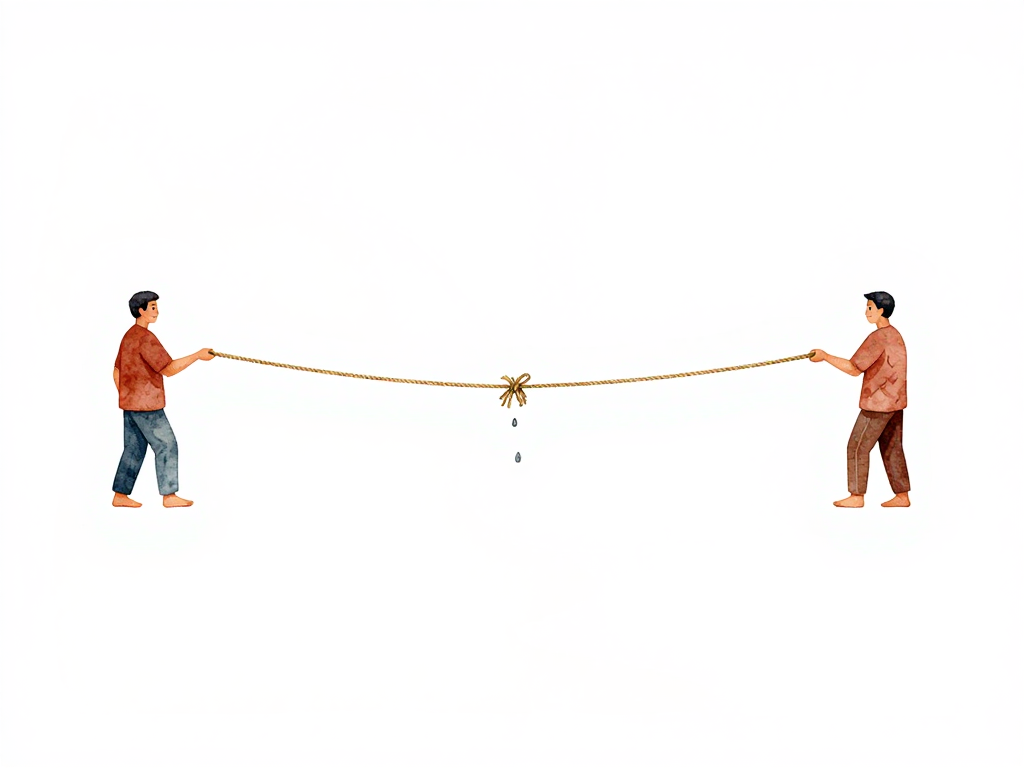
The Hidden Cost of Handoffs in Your Delivery Pipeline
You push your code, open a ticket, and wait. The QA team is busy with another sprint's work, so your changes sit in a queue for two days. When they finally get to it, they find an issue that requires a minor fix. You've already moved on to another feature, so you spend an hour reorienting yourself to code you wrote last week. You fix it, push again, and the cycle repeats. This time, the deployment team is backed up, so you wait another day. When the change finally reaches production, no one can remember exactly what was tested or why a particular decision was made.
This scenario is painfully familiar in many engineering organizations. The problem isn't bad people or poor intentions. It's the invisible cost of handoffs.
What Makes Handoffs Expensive
Every time work moves from one person or team to another, you pay a price. These costs are rarely tracked, but they accumulate across every delivery cycle.
The following diagram illustrates how a single change accumulates delay across multiple handoffs:
Waiting time is the most obvious cost. When a developer finishes code and hands it to QA, that code enters a queue. QA might be finishing another test cycle, attending meetings, or dealing with production issues. The queue might last hours or days. During that wait, the developer has context-switched to other work. When QA eventually finds an issue, the developer must reconstruct their mental model of code they wrote days ago. That reorientation takes time and introduces risk.
Miscommunication compounds the delay. The developer knows exactly what changed and which parts need careful attention. But when they hand off to QA, that knowledge doesn't transfer completely. QA might test the wrong scenarios, miss critical edge cases, or request fixes for things that aren't actually problems. Bugs slip through because the person testing doesn't know what the person building was thinking.
Context disappears with each handoff. A single change might pass through five people: developer, QA, security reviewer, DBA, and deployment engineer. When something goes wrong in production, tracing the issue becomes a detective game. Each person only knows their piece of the puzzle. The full story of why a change was made, what was considered, and what was tested gets fragmented across conversations, tickets, and memories.
The Real Cost Isn't Just Time
These costs don't just slow you down. They change how your team behaves. When handoffs create friction, people start working around them. Developers batch changes to reduce the number of handoffs, which makes each release bigger and riskier. QA starts accepting incomplete testing because they know the queue is long. Security reviews become rubber stamps because no one has time to do a thorough review on every change.
The system adapts to the handoffs, but it adapts in ways that make delivery worse.
Reducing Handoffs Without Removing Roles
The solution isn't to eliminate QA, security engineers, or DBAs. These roles exist for good reasons. The solution is to change how they participate in the delivery process.
Self-service is the most effective pattern. Instead of waiting for another team to do something, each team can do their own work using tools and services provided by others. A developer runs automated tests in the pipeline without asking QA to run manual tests. QA adds new test cases to the pipeline without waiting for DevOps to change configuration. A security engineer embeds rules into the pipeline so every change is automatically checked without a manual review each time.
This is where a platform team becomes valuable. The platform provides standardized pipelines that include automated testing, security scanning, and database migration steps. Developers push code, and the pipeline runs automatically. QA monitors test results on a dashboard. Security engineers review scan reports. No one waits for anyone else. No one hands off work manually.
Automation replaces handoffs. The pipeline becomes the mechanism that moves work from stage to stage. It doesn't wait in a queue. It doesn't forget context. It records every step, every decision, and every result. When something fails, the pipeline shows exactly where and why.
What Still Needs Human Involvement
Not every handoff can be automated. Some decisions genuinely require human judgment. Approving a production release, reviewing a complex architectural change, or deciding whether to roll back a deployment during an incident all benefit from human context and experience.
The goal isn't zero handoffs. The goal is to eliminate the handoffs that don't add value. Automated checks handle the routine decisions. Humans focus on the exceptions, the trade-offs, and the judgment calls that machines can't make.
Practical Checklist for Reducing Handoffs
Before your next release cycle, review these questions with your team:
- Which handoffs in your current process are purely administrative (moving a ticket, updating a status, sending a notification)?
- Can any manual testing step be replaced by an automated test in the pipeline?
- Does your security team review every change, or only changes that touch sensitive areas?
- Can developers provision their own test environments without waiting for another team?
- Does your pipeline record decisions and results so anyone can trace what happened to a change?
Pick one handoff that causes the most waiting or confusion in your team. Automate it or make it self-service before your next release.
The Takeaway
Handoffs are not a sign of a well-structured process. They are friction points that slow delivery, erode context, and create risk. The teams that deliver reliably don't eliminate roles. They eliminate the waiting, the miscommunication, and the lost context by building pipelines and platforms that let each role contribute without passing work through human queues. Every handoff you automate is a decision you stop having to make twice.