Why Your Engineering Team Is Getting Slower (Even Though You Keep Hiring)
A few years ago, a product team I worked with had fifteen engineers. They were shipping features every two weeks. Management decided to double the team size to ship faster. Six months later, with thirty engineers, they were shipping every three weeks. Everyone was confused. The engineers weren't lazy. They weren't less skilled. Something invisible was slowing them down.
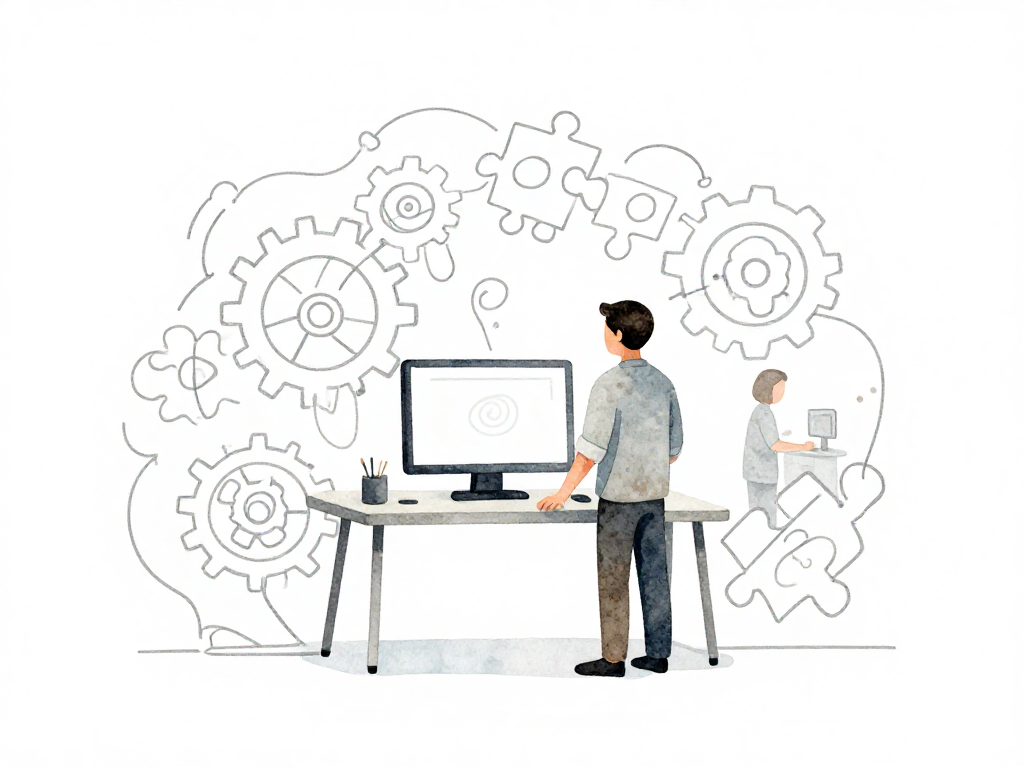
That invisible thing is what we now call cognitive load. And it's the main reason platform engineering exists.
The Hidden Work Before Writing Code
Imagine you're a developer assigned to build a new feature. Before you write a single line of business logic, you need to:
- Set up a new repository with the right branch protection rules
- Create a build pipeline and a test pipeline
- Configure a development environment that connects to a development database
- Figure out how to deploy to staging
- Learn the company's production deployment process
- Understand how to rollback if something goes wrong
- Set up monitoring and logging for your service
Every one of these tasks requires context switching. You have to remember which tool the team uses for CI, which cloud provider hosts the staging environment, which database version is compatible, and who to ask for access to production.
For a developer who wants to focus on building features that users actually see, this is exhausting. And it's not about skill. Even senior engineers get slowed down when they have to juggle infrastructure knowledge alongside feature logic.
The Real Cost: Cognitive Load
Cognitive load is the amount of mental effort required to complete a task. When you're writing a feature, your brain is processing the business logic, the data flow, the edge cases. That's already a lot. Now add deployment commands, environment variables, pipeline configuration, and rollback procedures. Your brain is now splitting its capacity between two very different domains.
The result is predictable: features take longer, mistakes happen more often, and engineers feel drained at the end of the day. Not because they're bad at their jobs, but because they're forced to hold too many things in their head at once.
This problem compounds as the company grows. A team of three to five people can share knowledge informally. Everyone knows how everyone else deploys. But when you have ten product teams, each with their own preferences, the chaos multiplies. One team uses Jenkins. Another uses GitLab CI. A third uses GitHub Actions. One team deploys directly to production. Another requires three levels of manual approval. One team runs Kubernetes. Another uses plain virtual machines.
Now the platform or DevOps team is overwhelmed because every team needs help with a different setup. And the product teams are still slow because they're spending half their time on infrastructure.
Platform Engineering Is Not Another Tool
This is where platform engineering enters the picture. But it's important to understand what it is and what it isn't.
Platform engineering is not building a fancy dashboard or buying a new tool. It's a shift in mindset: infrastructure and pipelines are no longer side projects that teams handle when they have time. They become internal products that must be designed, built, and maintained with the same rigor as the products your customers use.
The core idea is simple: instead of every team building their own pipeline from scratch, the platform team provides a ready-to-use path. Instead of every team learning how to deploy to production, the platform provides a tested, safe deployment mechanism. Product teams focus on code and features. The platform handles the infrastructure and pipeline overhead.
This reduces cognitive load dramatically. Developers no longer need to remember how to set up environments, how to configure monitoring, or how to handle rollbacks. The platform does that. They just write code and run the pipeline that's already there.
The Trap of One-Size-Fits-All
But here's where many platform efforts fail. They try to force every team into the exact same workflow. That doesn't work because teams have different needs. Some need fast deployment cycles. Some need strict approval gates. Some use specific databases or programming languages that require special handling.
If the platform is too rigid, teams will bypass it. They'll build their own workarounds, and you're back to the original problem of fragmented infrastructure and high cognitive load.
A good platform accommodates differences without pushing teams back to managing everything themselves. It provides a standard path that covers the common cases, but allows teams to make choices where it matters. This is where the concept of a golden path comes in, which we'll explore in detail later.
What This Means for Your Team
If your engineering team is growing but delivery speed is not, look at the invisible work. Ask your developers: what do you need to know or do before you can start writing a feature? The answers will tell you where the cognitive load is highest.
The goal of platform engineering is not to control teams. It's to remove the friction that slows them down. When done well, it lets developers stay in their flow state, building features that matter, while the platform handles the rest.
Practical Checklist
Before you start building a platform, ask these questions:
- What tasks do developers repeat across every feature or service?
- Which infrastructure tasks take the most time to learn or troubleshoot?
- Where do teams create their own workarounds because the existing process doesn't fit?
- What would a developer need to know to deploy a new service from scratch today?
- Which parts of the pipeline cause the most anxiety or delays during releases?
The Takeaway
Your team isn't getting slower because they're bad at their jobs. They're getting slower because they're carrying invisible weight. Platform engineering is about removing that weight, not adding more tools. Start by understanding what your developers actually struggle with, then build the path that makes those struggles disappear.