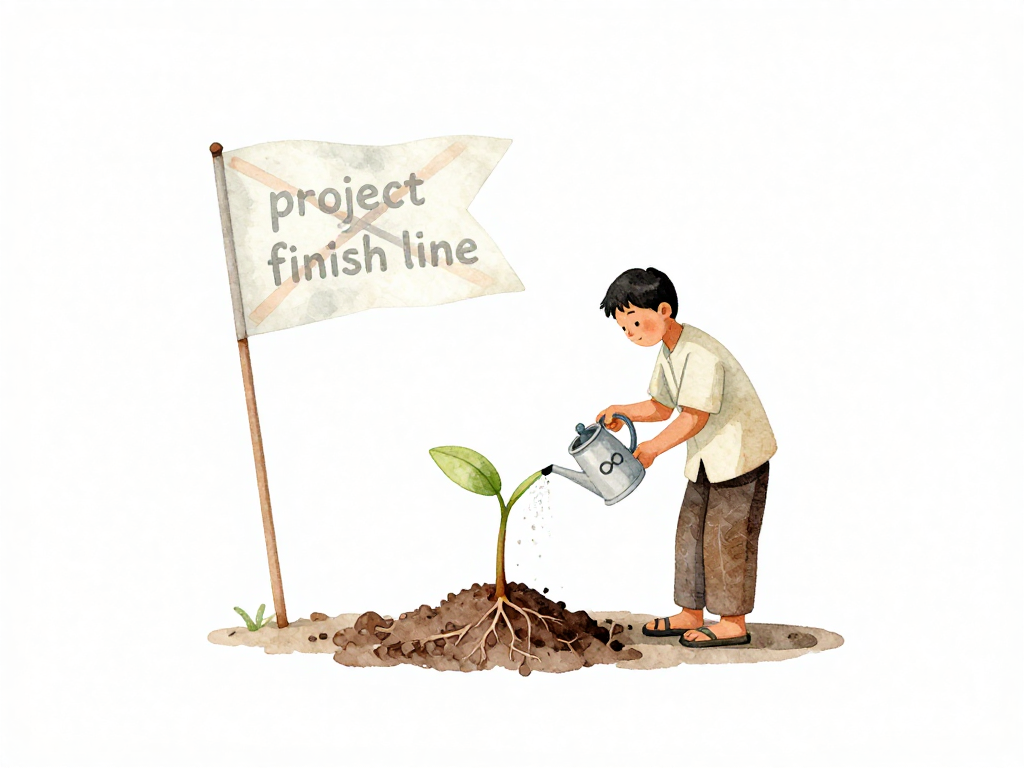
CI/CD Is Not a Project. It's a Capability.
A team builds their first pipeline. The build passes. The deployment works. Everyone high-fives. The ticket is moved to "Done." The team moves on to the next feature.
A few weeks later, someone needs to update a database schema. The pipeline doesn't handle that. Someone else changes an infrastructure config manually because "it's faster." The staging environment drifts away from production. The team starts wondering: didn't we already fix delivery?
This pattern repeats in teams across the industry. They treat CI/CD like a project with a start date and an end date. They hit the milestone, declare victory, and move on. Then reality catches up.
Projects End. Capabilities Grow.
A project has a finish line. A capability does not. CI/CD is not a tool you install or a pipeline you build once. It is the organization's ability to deliver changes safely, repeatedly, and with confidence. That ability cannot be bought in a software package or completed in a single sprint.
Think about what happens after that first pipeline goes live. The team discovers new types of changes that need automation. Database migrations that weren't part of the original plan. Infrastructure configurations that still require manual steps. A staging environment that behaves differently from production. Each discovery means the pipeline needs to expand or adjust.
This is not a sign of failure. It is a sign that delivery is a living system. The team's understanding of their own change patterns grows over time. The gaps become visible only after the team starts using the pipeline for real work. Every gap they find is an opportunity to improve the capability.
The Culture Behind the Pipeline
Continuous delivery is not just about automation. It is about how the team thinks about change. A team with a strong delivery culture does not need everyone to use the same tools or follow rigid procedures. The culture is simpler than that: everyone understands that change is constant, and their job is to make the delivery process easier, not harder.
When this culture exists, developers stop fearing changes. They know the pipeline will catch problems before they reach users. Operations teams stop dreading last-minute deployments. They know the process has been tested and the rollback path is clear. Everyone moves in the same direction.
This culture does not appear automatically when you install a CI/CD tool. It grows as the team experiences the benefits of automation and builds trust in the process. A developer who has been saved by a failing test learns to write better tests. An operator who has rolled back a bad deployment in seconds learns to invest in faster rollback procedures. Each positive experience reinforces the culture.
Keep Asking Better Questions
A team that treats CI/CD as a capability never stops evaluating how they work. The questions change over time, but they never stop:
- Does the current pipeline cover all the types of changes we make regularly?
- Are there manual steps that could be automated?
- How fast can we roll back when something goes wrong?
- Do our environments match well enough to catch issues before production?
- What did we learn from the last incident that could improve our pipeline?
These questions get answered differently as the team matures. A team that just started might be happy with a basic build-and-deploy pipeline. A team shipping multiple times a day needs more sophisticated testing, gradual rollouts, and faster feedback loops. Both are valid. The key is that the team keeps asking and keeps improving.
It's Okay to Start Small
The first pipeline does not need to be perfect. It does not need to handle every edge case. It does not need to automate every manual step. A simple pipeline that builds the application and runs basic tests is already better than no pipeline. It gives the team a foundation to build on.
What matters is that the team has a direction. They know they want to make delivery safer and faster. They know they will discover gaps as they go. They know the pipeline will evolve with their understanding. The first version is just the beginning.
A Practical Check
Here is a simple way to check if your team is treating CI/CD as a capability or a project:
- When someone finds a gap in the pipeline, is there a clear path to fix it, or does it get ignored?
- Does the team regularly discuss how to improve delivery, or only when something breaks?
- Are manual steps documented and tracked for automation, or accepted as permanent?
- When a new type of change appears, does the team update the pipeline, or work around it?
- Does the team celebrate pipeline improvements the same way they celebrate feature releases?
If most answers point toward treating delivery as a one-time effort, the team has room to grow. That is fine. The important thing is to recognize it and start shifting the mindset.
The Real Work Never Stops
CI/CD is not a finish line. It is the road you travel every time you ship a change to users. The road gets smoother over time, but it never ends. New challenges appear. New types of changes emerge. New team members bring new perspectives. The capability grows with every deployment, every incident, and every lesson learned.
The teams that succeed are not the ones with the most sophisticated pipelines. They are the ones that understand delivery is a continuous practice, not a checkbox to tick. They invest in the capability, not just the tooling. They keep asking what can be improved, and they act on the answers.
Your first pipeline is not the destination. It is the first step on a long road. Keep walking.