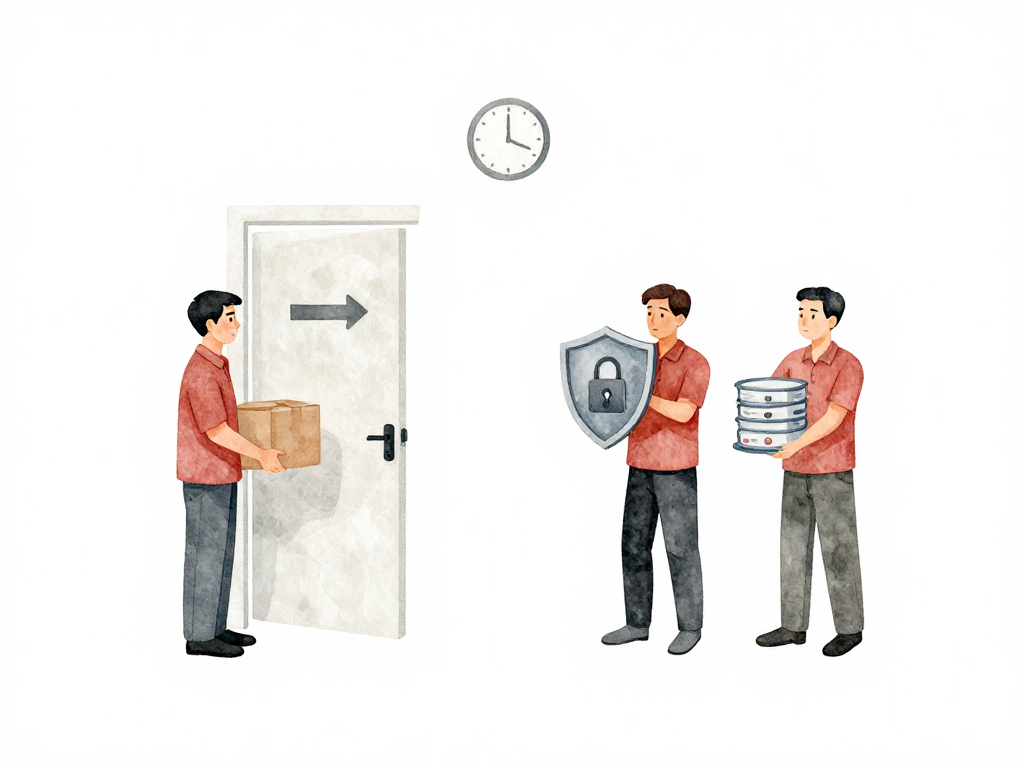
Why DBAs and Security Engineers Keep Blocking Your Releases (And How to Fix It)
You have a feature ready. Developers finished the code. QA signed off. The staging environment looks good. You schedule the release for tonight.
Then the DBA looks at the change and says: "This migration will lock the table for five minutes. Production is busy at that time. We can't do this."
Or the security engineer reviews the upload feature and finds no file type validation, no size limit, and direct public access to uploaded files. They say: "This can't go out."
The release is delayed. Again.
This scenario repeats across teams every week. The common reaction is to blame the DBA or the security engineer for being blockers. But the real problem is how and when they get involved.
The DBA's Problem With Late-Stage Changes
Database administrators are responsible for keeping the database stable, available, and performant. They know the production behavior: which tables have high traffic, when load peaks, and which operations cause locks. A developer testing a schema change on their laptop with a few hundred rows does not experience what happens when that same migration runs against millions of rows under active transactions.
When a DBA sees a change for the first time at the release gate, their only options are approve or reject. They have no context about how critical the feature is, whether there is a workaround, or if the migration can be split into safer steps. So they default to caution. They ask for more time. They ask for a different approach. The release stalls.
The DBA is not trying to block you. They are trying to prevent an incident that they will have to fix at 2 AM.
The Security Engineer's Dilemma
Security engineers face the same pattern. They get pulled in at the last moment, handed a feature, and asked to approve it quickly. But they see things the team missed during development: unvalidated inputs, missing authentication checks, exposed endpoints, data leakage risks.
If they approve without review, they own the risk. If they reject, they become the blocker. Neither option is good.
Security engineers do not enjoy saying no. They want features to ship safely. But when they are only consulted at the end, their only leverage is the veto. They use it because the alternative is shipping a vulnerability.
The Root Cause: Late Involvement
Both roles become bottlenecks for the same reason: they are treated as gatekeepers at the end of the pipeline instead of collaborators throughout the process. The team builds the feature, tests it, and only then asks for approval. By that point, any issue means rework, delay, or a risky exception.
This is not a people problem. It is a workflow problem.
Shift Left: Move Review Earlier
The solution is to involve DBAs and security engineers before code is written, not after it is ready to deploy. This approach is often called shift left -- moving checks earlier in the delivery flow.
The contrast between the old and new flows is clear:
For database changes, this means a developer discusses the planned schema change with the DBA during design. The DBA can say:
- This migration is safe to run online.
- This change needs a backfill strategy first.
- This table needs a maintenance window.
- We should split this into multiple smaller migrations.
The developer adjusts the plan before writing code. When the change reaches the release stage, the DBA already knows about it and has already approved the approach. No surprise, no delay.
For security, the same principle applies. Before building an upload feature, the team asks: "What security risks does this feature introduce?" The security engineer provides guidance early: validate file types, enforce size limits, store files outside the web root, require authentication for access. The developer implements these from the start. When the feature is ready, the security review is a formality, not a discovery session.
Make It Asynchronous
Involving DBAs and security engineers early does not mean they attend every daily standup or sit in every design meeting. That does not scale. Instead, they can provide reusable artifacts:
- A DBA publishes guidelines for safe schema changes: which operations are safe online, which require a maintenance window, how to estimate lock duration.
- A security engineer maintains a security checklist for common feature types: file upload, authentication, API endpoints, data export.
- Both roles offer office hours or async review slots where developers can ask questions before writing code.
Developers use these resources to self-check before requesting a formal review. The DBA or security engineer only needs to review edge cases or high-risk changes. The rest follows the established patterns.
The Practical Checklist
Before your next release, ask these questions:
- Did the DBA see the database changes before development started?
- Did the security engineer review the feature design for risks?
- Are there written guidelines for safe migrations and security checks?
- Can developers self-check against those guidelines before requesting review?
- Is there a process for async consultation, not just last-minute gates?
If the answer to any of these is no, you have found your next bottleneck.
DBAs and Security Engineers Are Protectors, Not Blockers
They exist to prevent production incidents and data breaches. That is a good thing. The problem is when they are forced to do that job at the worst possible moment. When you involve them early, they can guide, advise, and protect without stopping the release. When you involve them late, they have no choice but to stop it.
Fix the timing, and the blocker disappears.