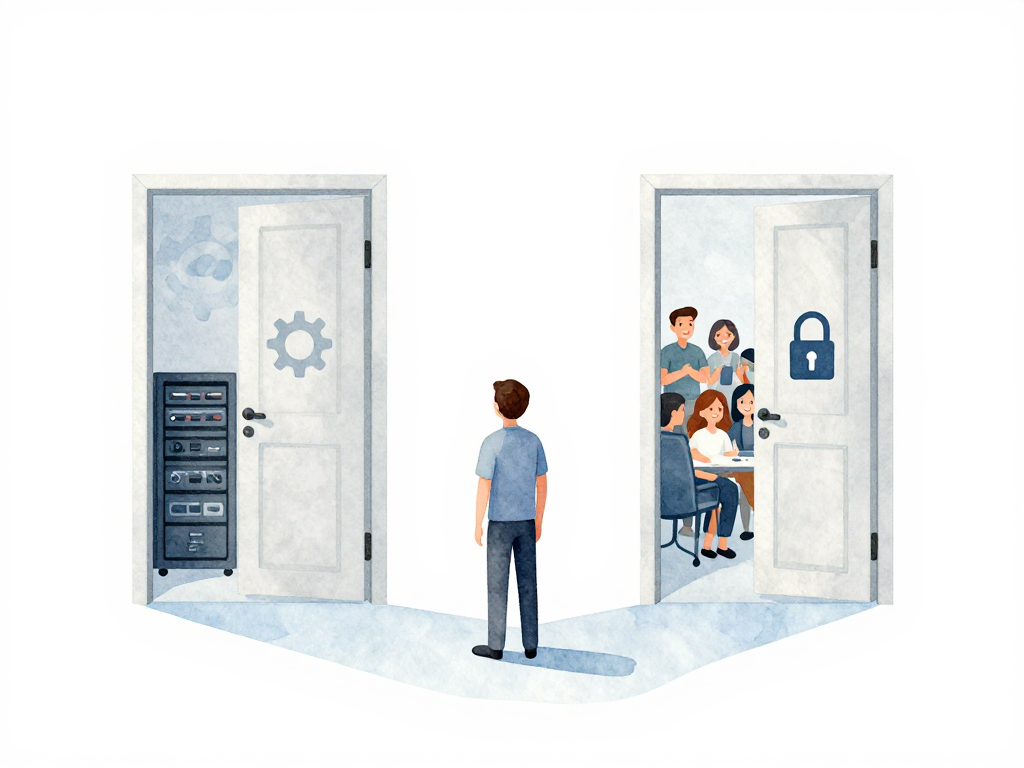
Deploy vs Release: Why You Need to Know the Difference
You just finished a new feature on your laptop. The code works, the tests pass, and you feel good about it. Now you need to get it to users. The obvious next step is to put the new version on the production server. You run the deployment script, the server starts running the new code, and you breathe a sigh of relief.
But here's the uncomfortable question: are your users actually seeing the new feature yet?
If you answered "yes" without thinking twice, you might be conflating two things that should stay separate. Deploy and release are not the same action, and treating them as one creates unnecessary risk.
What Deploy Actually Means
Deploy is a technical action. You take the artifact from your build process, move it to the target environment, and start it there. The server now runs the new version. From a technical standpoint, the application is in the right place and running.
Think of it like this: you just moved into a new apartment. Your furniture is inside, the lights are on, and the place is livable. But you haven't unlocked the front door for guests yet.
Deploy answers the question "Is the new version on the server?" It does not answer "Are users using it?"
What Release Actually Means
Release is a business decision. It's the moment when users can genuinely access and use the changes you deployed. You can deploy without releasing. The new version sits on the server, but users still interact with the old version.
This distinction matters because it gives you control. When you separate deploy from release, you gain the ability to verify, schedule, and roll back changes independently.
Why Separating Them Changes Everything
You Can Verify Before Users See It
The following sequence diagram illustrates the separation:
After deploy, your team can check that the application runs normally in production without exposing users to potential issues. You can run smoke tests, check error rates, and confirm that the database migration didn't break anything. If something looks wrong, you fix it before anyone notices.
This is the difference between "we deployed and hope it works" and "we deployed, verified it works, and then decided to let users see it."
You Control When Changes Hit Users
Maybe you want to release during low traffic hours. Maybe your marketing team needs time to prepare an announcement. Maybe you're waiting for documentation to be ready. With separate deploy and release, you can schedule the release independently from the deploy.
This is especially useful for time-sensitive changes. You can deploy a security patch immediately to production servers, then release it to users at a carefully chosen moment.
Rollback Becomes Safer
Rollback is the action of returning the application to a previous version. When deploy and release are coupled, rolling back is all or nothing. You revert the code, and users immediately see the old version.
When they are separate, you have options. If the release causes problems, you can roll back the release without redeploying the old version. The new code stays on the server, but users see the old behavior. Alternatively, you can roll back the deploy, and the release follows automatically.
This flexibility reduces the pressure on your team. You don't need to rush a fix because you can quickly hide the problematic change from users.
How to Separate Deploy and Release in Practice
The simplest approach is feature toggles. You deploy the new code with the feature turned off via configuration. When the team is ready, you flip the toggle. That flip is your release moment.
Another approach is traffic routing. Deploy the new version to a subset of servers, then gradually direct users to the new version. This is common in canary deployments and blue-green deployments. The deploy happens when the new version is on the servers. The release happens gradually as traffic shifts.
Some teams use environment separation. Deploy to a staging environment that mirrors production, verify there, then deploy to production and release immediately. This still separates deploy from release if you consider the staging deploy as a verification step before the production release.
Common Misconceptions
"Deploy and release are the same in our setup." This usually means you never separated them, not that they are inherently the same. If your deploy automatically makes the feature available to all users, you have coupled them by choice, not by necessity.
"Feature toggles add complexity." They do, but the complexity is manageable. Start with simple boolean flags in configuration files. You don't need a full feature flag system on day one.
"Separating them slows us down." Initially, yes. But the first time you catch a production issue before users see it, or the first time you roll back a release in seconds instead of minutes, you'll see the value.
A Quick Practical Checklist
Before your next deploy, ask these questions:
- After deploy, how will we verify the new version works in production?
- What is the trigger for release? Time-based? Manual approval? Automated health check?
- If the release causes problems, how do we hide it from users without redeploying?
- Who decides when to release? Engineering? Product? Both?
- Can we deploy without releasing? If not, what's the smallest change to make that possible?
The Real Takeaway
Deploy and release are two different moments in the delivery process. Deploy is technical: the code is on the server. Release is business: users can use the code. Keeping them separate gives you verification time, scheduling flexibility, and safer rollback options.
You don't need complex tooling to start. A simple configuration flag or a manual traffic switch is enough. The important thing is to recognize that these are two decisions, not one. Once you treat them separately, you'll wonder why you ever treated them as the same thing.
And this distinction becomes even more important as you start deploying more frequently. Because after the first release, your application will keep changing. Each change goes through deploy and release again. Understanding the difference early makes those repeated cycles safer and less stressful.