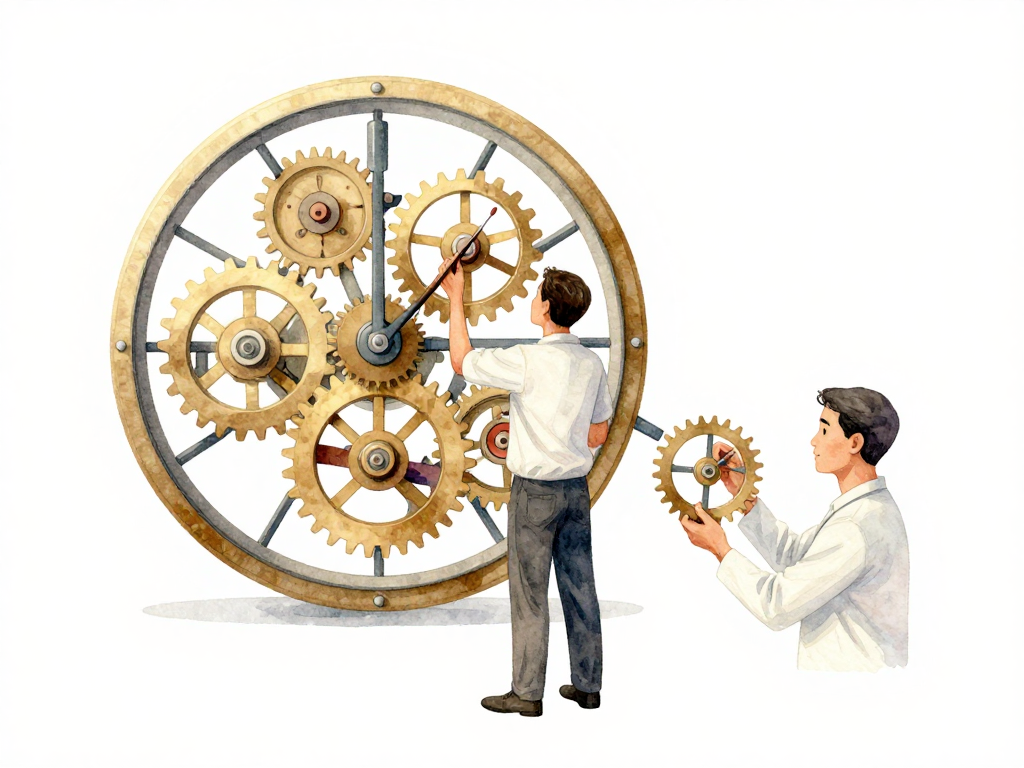
When a Feature Team Should Not Touch the Code: The Case for a Complicated-Subsystem Team
Your team is building an e-commerce platform. You own the checkout flow, the product catalog, and the user profile page. Everything is going well until the payment module needs a change. Suddenly, the simplest update requires three code reviews, two approvals, and a prayer before deployment. One wrong line could double-charge a customer or lose a transaction entirely. The team slows down, not because they are bad engineers, but because the payment engine is a different beast.
This situation is common. Every application has parts that are too risky, too specialized, or too complex for a generalist feature team to handle safely. The standard stream-aligned team structure works great for most features, but it breaks down when the code requires deep, narrow expertise. That is where the complicated-subsystem team comes in.
What Makes a Subsystem Complicated
Not every piece of code needs its own dedicated team. A complicated subsystem has specific characteristics. It rarely changes, but when it does, the impact is wide and dangerous. It requires knowledge that takes months or years to build. The behavior is non-obvious: edge cases, race conditions, and subtle state dependencies that only reveal themselves in production.
Think of a payment engine, a core database schema, a billing system, or a fraud detection module. These are not just complex in the sense of having many lines of code. They are complicated because the cost of getting it wrong is high, and the path to getting it right is narrow. A feature team working on product pages cannot afford to spend three weeks learning the payment gateway's quirks just to add a new payment method.
How a Complicated-Subsystem Team Works
This team exists for one purpose: to own and maintain a specific subsystem that requires deep expertise. They do not build user-facing features. They do not respond to customer requests directly. Their job is to keep the subsystem stable, safe, and ready for consumption by other teams.
The interaction model is X-as-a-Service. The complicated-subsystem team provides a clear interface, usually an API, that stream-aligned teams can call without understanding the internals. The payment team exposes endpoints for processing payments, checking transaction status, and initiating refunds. The feature team calls those endpoints and moves on. They never need to know how the bank connection works or how reconciliation logic handles duplicate transactions.
This boundary is critical. It protects the feature team from complexity they do not need, and it protects the subsystem from changes made by people who do not fully understand it.
When Collaboration Becomes Necessary
The X-as-a-Service model works well for routine operations, but sometimes a feature team needs something new from the subsystem. Maybe they need a partial refund capability that does not exist yet. In that case, the two teams collaborate temporarily. The feature team explains the requirement. The complicated-subsystem team designs the change, implements it, and extends the API. Once the new capability is available, the collaboration ends. The feature team goes back to calling the API, and the complicated-subsystem team returns to maintaining the subsystem.
This temporary collaboration is not a failure of the model. It is how the model stays useful. The key is that the collaboration has a clear scope and a defined end. It does not turn into a permanent dependency where feature teams wait on the complicated-subsystem team for every small change.
Avoiding the Bottleneck
The biggest risk with a complicated-subsystem team is that it becomes a bottleneck. If every change to the subsystem requires the team's involvement, feature teams will slow down. The solution is to invest heavily in the interface. The API must be flexible, well-documented, and designed to cover common use cases without requiring constant updates. The team should also maintain a robust CI/CD pipeline for their own subsystem, including thorough integration tests and safe deployment strategies like blue-green or canary releases.
When the interface is good, most feature teams never need to talk to the complicated-subsystem team. They just use the API and move on. The team only gets involved when something genuinely new is needed.
Practical Checklist for Identifying a Complicated Subsystem
Before you spin up a complicated-subsystem team, check if the code really fits the profile:
- Does a single mistake in this code have a high financial, security, or operational cost?
- Does it require specialized knowledge that takes months to acquire?
- Does it change infrequently, but with wide impact when it does?
- Would a feature team be significantly slower if they had to own this code?
If you answered yes to most of these, a complicated-subsystem team is worth considering. If not, keep the code in the feature team and invest in better testing and documentation instead.
The Takeaway
A complicated-subsystem team is not about gatekeeping code or creating hierarchy. It is about protecting both the subsystem and the feature teams from unnecessary risk. The feature team stays fast because they do not need to learn the internals of a payment engine. The subsystem stays safe because only people who truly understand it make changes. The interface between them is the contract that makes this work. Invest in that interface, and both teams win.