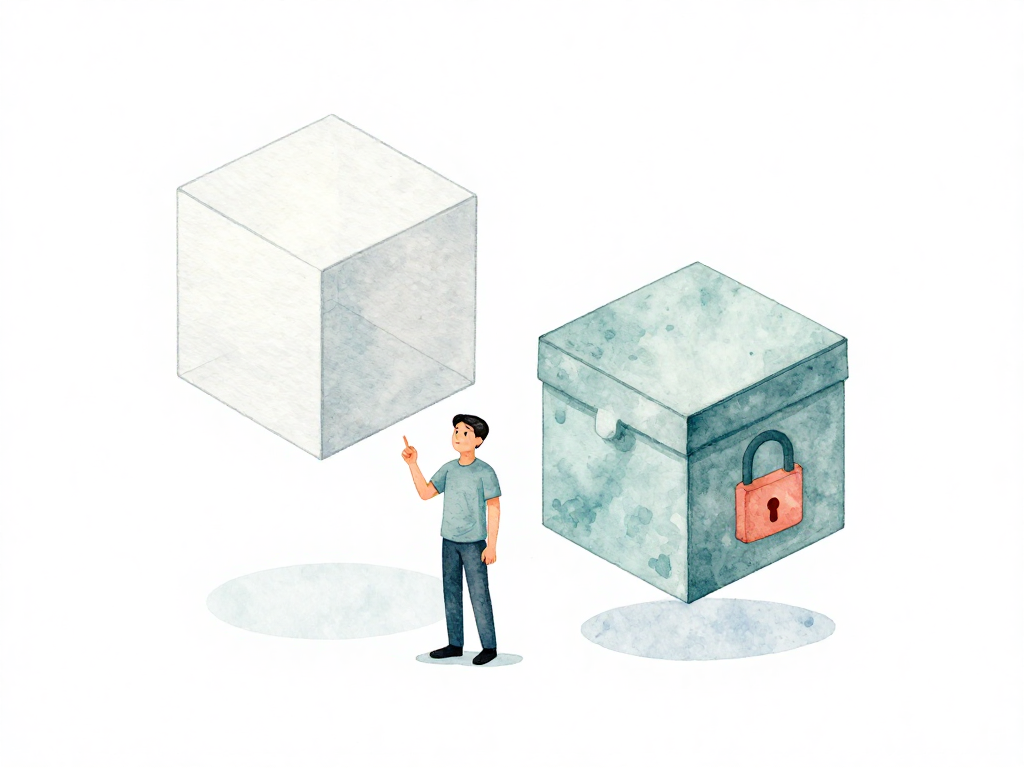
Why Your Deployment Strategy Depends on What Kind of Application You're Building
When you first start building software, every application looks roughly the same. You write code, you run it, someone uses it. But the moment you need to ship that application to a place where real users depend on it, you quickly discover that applications have very different personalities. And those differences determine everything about how you deploy them.
The Stateless Application: Simple and Replaceable
Imagine a weather API. It accepts a city name, returns temperature and humidity data. Every request is independent. The application fetches fresh data each time, stores nothing locally, and has no memory of who asked what.
This kind of application is called stateless. It doesn't care about previous requests. Each call is a clean slate.
Stateless applications are the easiest to deploy. If a new version breaks, you swap it out with the old one. No data to worry about, no migration to reverse, no compatibility headaches. You can roll back in seconds. You can scale them horizontally by running more copies. You can kill instances without ceremony.
The risk is contained. If something goes wrong, the damage is limited to the requests that were in flight. Nobody loses data. Nobody's session gets corrupted.
The Stateful Application: Careful and Complicated
Now picture a cinema ticket booking system. This application stores which seats are taken, who bought them, and how they paid. Every transaction changes the state of the system. The database holds the truth, and the application code must stay in sync with that truth.
This is a stateful application. It depends on persisted data. And that changes everything about deployment.
You cannot simply swap versions. If the new version changes how it reads or writes data, the database schema might need to migrate first. If the migration runs and the new code has a bug, rolling back is not straightforward. The old code might not understand the new schema. The data might have already been transformed. You might have to restore from backup, which takes time and risks losing recent transactions.
Stateful applications demand a careful sequence: migrate the database, deploy the new code, verify everything works, and have a plan for what to do if it doesn't. Rollback is rarely a single command. It is often a multi-step procedure that requires coordination.
The Impact Spectrum: Internal Tool vs Public Service
Applications also differ in how much damage they can cause when they break.
Consider an internal admin dashboard used by five people in your company. If it goes down for ten minutes, someone might be annoyed, but nobody loses money. The deployment can be straightforward. You can afford some downtime. You can push changes and fix issues later.
Now consider a payment gateway or an e-commerce checkout page. Thousands of users hit it every second. If it breaks, transactions fail, users complain, revenue drops. The impact is immediate and measurable.
This difference in impact determines how cautious you need to be during deployment. Low-impact applications can be deployed directly with minimal ceremony. High-impact applications demand staged rollouts, monitoring, feature flags, and a clear rollback plan. You might deploy to one server first, watch for errors, then gradually increase traffic. You might run the new version alongside the old one for a while. You might use canary deployments or blue-green strategies.
The following flowchart helps you decide which deployment strategy fits your application's nature and risk level:
The level of process should match the level of risk. Not every application needs a multi-hour deployment pipeline with approvals and runbooks. But the ones that can cause real damage deserve that attention.
Dependencies: The Hidden Coupling
Some applications are self-contained. They run without needing anything else. You deploy them, they work.
Most applications are not like that. They depend on databases, external APIs, message queues, or other internal services. A new version of your application might rely on a new endpoint from an API that hasn't been updated yet. It might expect a certain response format that the old API doesn't provide. It might need a database migration that hasn't run.
Dependencies create coupling. When you deploy a new version, you must ensure that everything it depends on is available and compatible. This is not just about uptime. It is about contract compatibility. Your new code might work perfectly in isolation but fail in production because the database schema changed, the API response changed, or the message format changed.
This is why deployment order matters. If your application depends on a database, the database migration usually comes first. If it depends on another service, that service should be deployed first or at least be backward compatible. If you cannot guarantee compatibility, you need to design your deployment to handle both old and new versions running simultaneously.
What This Means for Your CI/CD Pipeline
All these differences -- stateless versus stateful, low impact versus high impact, independent versus dependent -- shape how you build your CI/CD pipeline.
There is no single deployment strategy that works for every application. A pipeline designed for a stateless microservice will fail for a stateful monolith. A deployment process built for an internal tool will be too risky for a customer-facing payment system. A rollback plan that works for a self-contained application will break for one that depends on a migrated database.
Your pipeline must reflect the nature of the application it serves. That means:
- Stateless applications can use simple pipelines with fast rollback.
- Stateful applications need careful migration steps and tested rollback procedures.
- High-impact applications require staged deployments and monitoring gates.
- Dependent applications need compatibility checks and ordered deployments.
Practical Checklist for Evaluating Your Application's Deployment Needs
Before you design or adjust your deployment pipeline, run through this checklist:
- Does the application store data that must survive deployments? If yes, plan for database migrations and reversible schema changes.
- How many users are affected if the application goes down? If the number is large or the financial impact is high, add staged rollouts and monitoring.
- Does the application depend on other services or databases? If yes, verify compatibility and plan the deployment order.
- Can you roll back by swapping the old version, or do you need to revert data changes? If the latter, test the rollback procedure before you need it.
- Can the application handle running two versions at the same time? If not, you may need downtime or a blue-green deployment pattern.
The Concrete Takeaway
The way you deploy an application is not determined by the programming language, the framework, or the tool you use. It is determined by the application's nature: whether it holds state, how much damage a failure causes, and what it depends on. Understand those three things first. Then design your pipeline. Everything else is implementation detail.