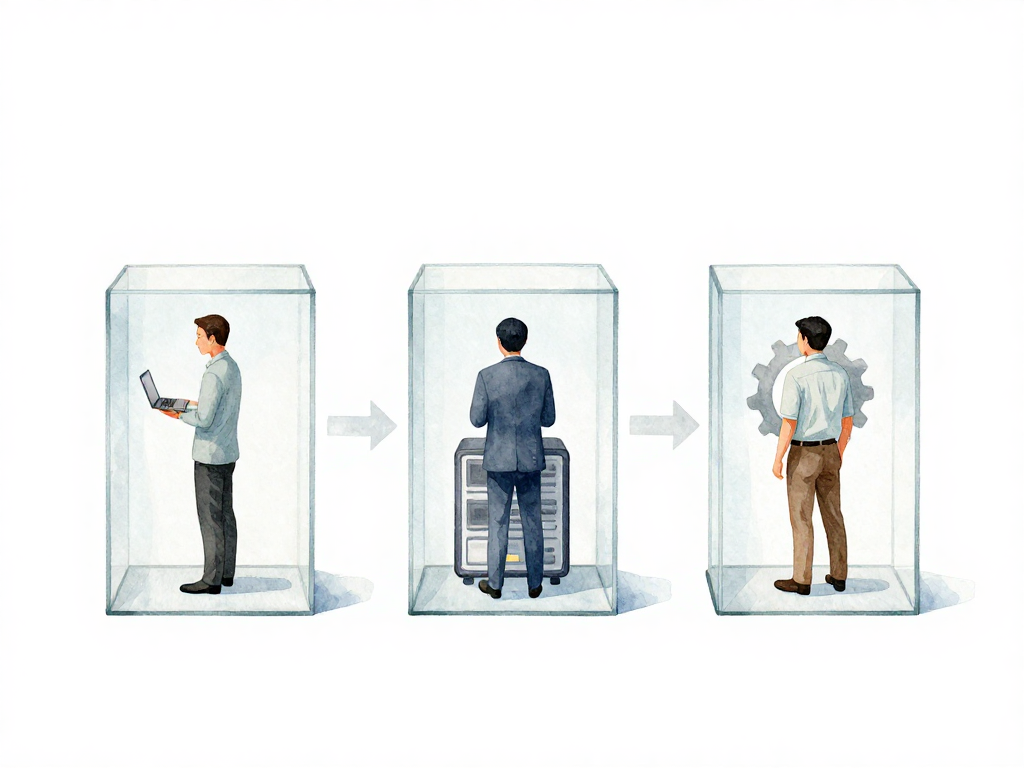
Why Your Delivery Feels Slow Even When Everyone Is Working Hard
You have a team of capable engineers. They write code, run tests, and ship updates. Another team manages servers, networks, and databases. A platform team builds internal tools. Everyone is busy. Everyone is competent. Yet every release feels like a crisis.
A small change takes days to reach production. Developers wait for infrastructure to be ready. The infrastructure team has no idea when the next release is coming. QA gets a version that's already past its deadline. When something breaks, nobody knows who should fix what. The release meeting becomes a blame game.
This isn't a people problem. It's an operating model problem.
The Real Cost of Working in Silos
When each team works independently, they optimize for their own world. The application team picks a CI/CD tool that works best for them. The infrastructure team chooses a different deployment tool. The platform team builds pipelines that don't connect to anyone else's workflow.
Every tool works. But they don't work together. Data doesn't flow between teams. Release status is invisible to the people who need it. When something goes wrong, teams waste time hunting down who has the information.
The following flowchart shows how work stalls at each handoff because teams use disconnected tools and have no shared view of release status:
The problem becomes obvious when your application has real users. Small changes require coordination across multiple teams. Each handoff adds delay. Each approval step creates a queue. The process feels slow, but no single person is responsible for the overall speed.
What an Operating Model Actually Does
An operating model answers basic questions that most teams never formally address:
- Who does what, and when?
- Which tools do we use, and how do they connect?
- How does work flow from code to production?
- How do we know if a release is healthy?
This is not a rigid procedure document. It's a shared framework that lets everyone move in the same direction. With a clear operating model, the application team doesn't need to guess when infrastructure will be ready. The infrastructure team knows when releases happen and what they need to prepare. The platform team understands which features to prioritize.
Everyone sees the same map.
Why You Can't Fix What You Can't See
Without an operating model, improvement is nearly impossible. Each team blames the others. The application team says infrastructure is too slow. The infrastructure team says the application team doesn't plan ahead. The platform team says nobody uses their tools correctly.
With an operating model, the workflow becomes visible. You can measure how long it takes from code commit to production. You can see where queues form. You can identify where automated checks are missing. You can find the bottlenecks that nobody noticed because nobody was looking at the whole picture.
This visibility turns blame into data. Instead of arguing about who is slow, you look at the numbers. The deployment pipeline shows exactly where time is lost. The monitoring data shows which changes cause problems. The metrics tell you what to fix next.
The Opposite of Rigidity
Some teams resist operating models because they fear bureaucracy. They worry that formal processes will slow them down. But a good operating model does the opposite. It creates space for speed by removing the need to renegotiate roles and responsibilities for every release.
Think about it this way: when every release requires the same discussions about who approves, who deploys, who monitors, and who rolls back, you waste time on coordination instead of delivery. An operating model makes those decisions once. Teams know their roles. They know how decisions are made. They know how to fix problems without waiting for permission.
The result is not rigidity. It's predictability. Teams can move fast because they don't have to figure out the basics every time.
What Happens Without One
Without an operating model, every release is an adventure. You never know if it will go smoothly or turn into a firefight. Success depends on who happens to be available, who remembers the right steps, and whether luck is on your side.
This is not sustainable. As your team grows and your application gets more users, the cracks get wider. New team members take months to learn the unwritten rules. Releases become more stressful. The gap between what customers want and what you can deliver keeps growing.
With an operating model, releases become a measured, controlled, improvable process. The journey from code to production no longer depends on memory or luck. It depends on a system designed intentionally.
Practical Checklist: Signs You Need an Operating Model
If you recognize any of these patterns, your team would benefit from defining an operating model:
- Release meetings always start with "Who has the latest status?"
- Teams use different tools for the same job without integration
- New team members take months to learn how releases work
- Post-mortems reveal the same coordination failures every time
- Nobody can measure end-to-end delivery time
- Teams blame each other for delays
- Rollbacks require manual coordination across multiple people
The Takeaway
Your teams are not the problem. The lack of a shared operating model is. When everyone works in their own silo with their own tools and priorities, delivery will always feel slow and chaotic. An operating model doesn't add bureaucracy. It removes the friction of uncoordinated work. It makes the invisible visible. It turns every release from an adventure into a process you can measure, control, and improve.
Start by asking one question: can your team describe exactly how code moves from a developer's machine to production, including who does what and which tools connect where? If the answer is unclear, you have found your first improvement opportunity.